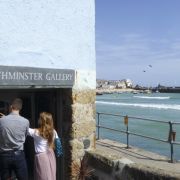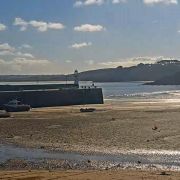
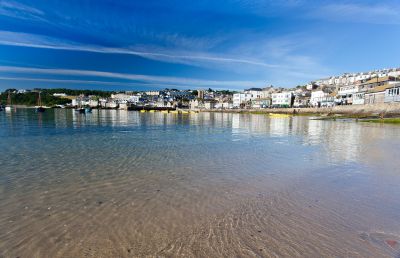
Perhaps the loveliest approach to St Ives is by way of the train from St Erth along the coastline through Lelant and Carbis Bay. The train station is just above Porthminster beach from where you can make your way to the town centre via the jumble of cottage lined streets known as 'the Warren'.
Another great view of the old fishing town is from the path winding down from the car park above the town. From here, you can catch glimpses out over the rooftops to the harbour and Island beyond.
Once you've made your way into St Ives proper, you can explore the charming jumble of old cobbled streets, such as all the little back lanes off the main shopping area, Fore Street. Parallel to Fore Street, Wharf Road is backed by lively bars and cafes overlooking the harbour and beach. Head west along the shore to Smeaton's Pier, and look back over the town across the fishing boats. St Ives really does set the standard for the term "picturesque".
Old St Ives
St Ives has been a busy fishing port since the Middle Ages. St Ives Museum contains a wealth of interesting information about the town's past including exhibits on smuggling, wrecking and the fishing industry.
The town grew out around the harbour, to form the well-known "Downalong" district, a maze of little cobbled lanes and courtyards which were once fishermen's houses and fish. They're still there today but the fishermen have largely gone and their homes repurposed as shops and accommodation.
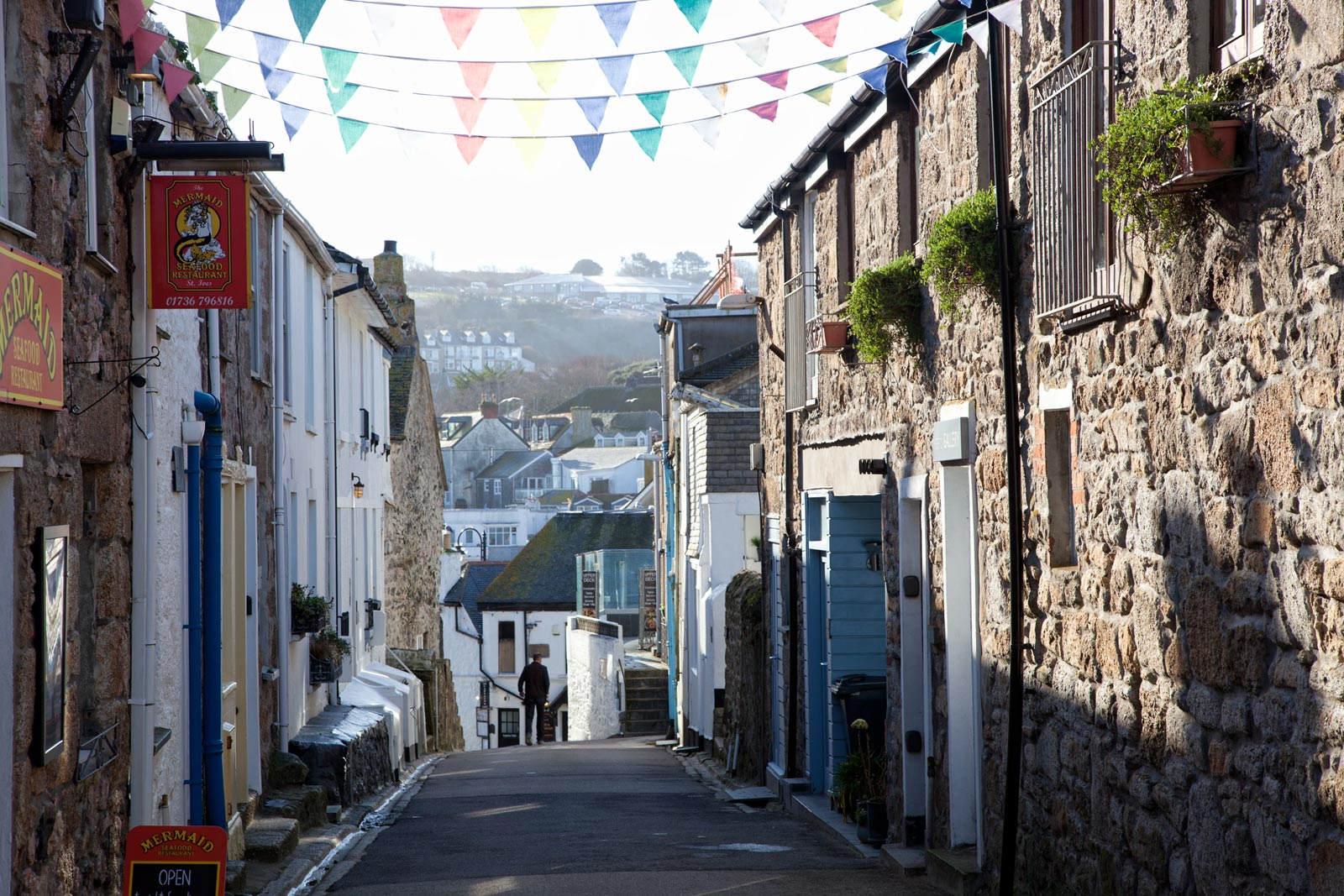
One of the joys of visiting St Ives is taking a stroll around these winding streets of old cottages between the harbour seafront and Back Road West. You'll find plenty of cafés and places to eat, from pasty shops to excellent restaurants. And bring your camera - but not your car…
Nowadays, pilchards have given way to tourism as the main industry. This initially came about after the extension of the railway, with St Ives station opening in 1877. This was shortly followed by the development of nearby Tregenna Castle as the grand station hotel.
More recently, the opening of the Tate Gallery gave tourism another boost. Together with the Barbara Hepworth Museum, this has had a knock-on effect in St Ives, leading to the opening of many more galleries and studios and an art scene that continues to flourish.
Art in St Ives

Art has played an important part in the life of St Ives since long before the arrival of the Tate gallery, or even the Barbara Hepworth Museum. For almost 200 years, the unique quality of light and spectacular scenery have been a draw to artists. JMW Turner, for one, painted a landscape here in 1811.
Although many other artists visited and painted in the area, it was not until the 1920s that the town became a centre for the arts. It was around this time that Bernard Leach started his pottery here and soon many more artists and writers were following in his footsteps, notably Ben Nicholson and Barbara Hepworth. This was the start of the St Ives School, and new groups of artists continue to make their marks in the area today.
The Island that's not an Island

The hump of land jutting out to sea is known as the Island. Called Pendinas ("head of the town") in ancient times, this was once a promontory fort. Forming a bulwark between the Atlantic Ocean and the harbour, the Island is firmly connected to the mainland and always has been - although there is sea on three sides (as can be seen from the aerial view). The diminutive Chapel of St Nicholas, Patron Saint of sailors, sits on the top of the Island. It was rescued from demolition in the early 1900s, and restored in 1911.
St Ives' Best Beaches
St Ives' greatest natural asset is the array of beautiful sandy beaches that surround the town. Porthgwidden Beach is set in the eastern lee of the Island, and is an ideal place for swimming. Just around the corner and overlooked by the Tate Gallery is the wide and sandy Porthmeor beach, one of the most popular surfing beaches in West Cornwall.

The expansive sands of the Harbour Beach are directly in front of Wharf Road in the town, and head east for Porthminster Beach and its highly rated cafe. The latter beach became a popular place for tourists during the Second World War, when so many other beaches were out of bounds to the public.
The long sandy beach at Carbis Bay is perfect for families, and is about a mile's fairly easy walk along the coast path.
St Ives Parish Church
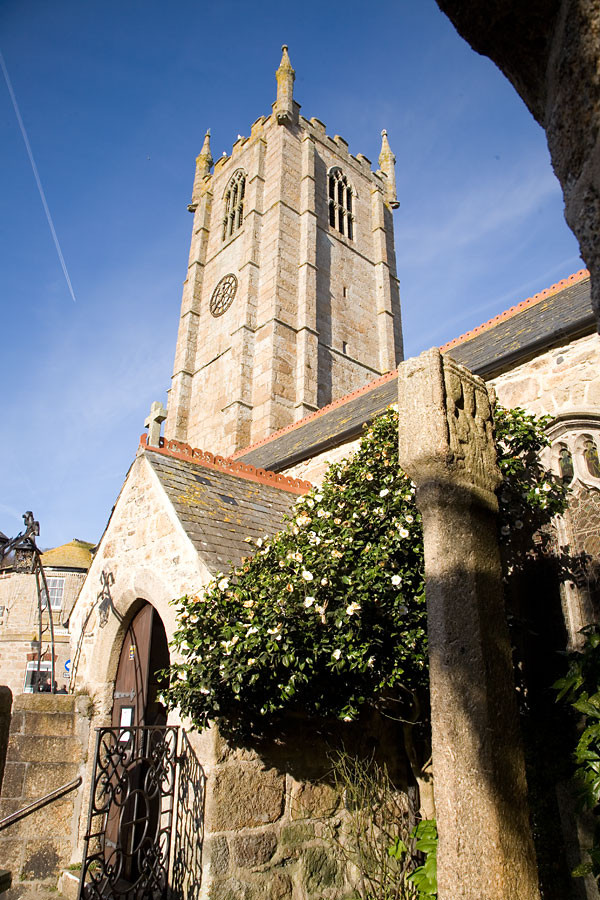
The 15th-century Church of St Ia dominates the lower St Ives townscape, and the old streets are clustered around it. Call into its cool interior to see the Madonna and Child carving by Barbara Hepworth in the Lady Chapel. The carving was created in memory of Hepworth's son, Paul, who died in a plane crash in 1953.
Who was St Ia you ask? She was an Irish princess who fled across the Celtic Sea to Cornwall (on a leaf), and founded a church where she came ashore - today's St Ives, or Porth Ia, to use the old Cornish name.
St Ives Harbour
Walk along Wharf Road, which runs the length of the seafront. At low tide, you can walk across the sand from Lambeth Walk to Harbour Beach. Smeaton's Pier (the harbour pier) with its octagonal cupola was built between 1767 and 1770. Stand on the end, and look out towards Godrevy Lighthouse or back towards the town.

There's another little chapel at the land end of the pier, St Leonard's. This dates to the late 16th century and like St Nicholas on the Island, fishermen would come here to pray for a good catch and a safe harbour.
Events in St Ives
Set high on a hilltop, overlooking St Ives, is Knill's Monument. The obelisk was built in the 18th century by John Knill, Mayor of St Ives in 1767 and he left behind a rather bizarre legacy. To fulfil the terms of his will, every five years, ten young girls dressed in white dance through the streets and up to the Monument. At the top, they are joined by two widows and the mayor who dance around the monument with the girls, while spectators sing the 100th psalm.
Another local custom is Hurling the Silver Ball, which is traditionally held on the first Monday of February. This kicks off when the mayor throws the ball from the church wall in the middle of the morning. It's then tossed from person to person, through the streets and down to the beach. At noon, whoever is holding the ball is the winner.

Slightly more subdued is the annual September Festival, a prominent recent addition to the St Ives events calendar. This lively festival features a range of art, music and literary events. Established around 30 years ago, the festival now attracts tens of thousands of visitors from all over the world.
New Year's Eve in St Ives has also become a popular celebration in the town. Thousands of revellers in fancy dress party in the pubs, bars and streets with the harbour area being the focal point. There's food, music and fireworks, and an great atmosphere.
Seal Island and other Boat Trips
One of the most popular things to do in St Ives is to catch the boat out to Seal Island. It's a rocky island on the coast between St Ives and Zennor, home to a colony of Grey Seals. St Ives Boats run trips out on the Dolly P, and they'll also take you east towards Hayle Towans and Godrevy Lighthouse. If you fancy a boat trip in St Ives, it's not hard to find them: there are always ticket stalls along Wharf Road in the summer.
St Ives for Dogs
On the whole, St Ives is a good place to be a dog. A lot of the pubs and restaurants are pet-friendly, especially along Wharf Road, where there's plenty of patio seating. However, the best thing about St Ives for canine visitors is that it has three year-round dog beaches for them to enjoy.

Like most Cornish beaches there are seasonal dog restrictions, which mean that during the summer months, dogs are either restricted (early morning and evening only, for example) or not allowed at all. Bamaluz Beach is a lovely little sandy cove to the west of the town, which welcomes pups at any time – well, as long as the tide's out. There's sand, sea and lots of fascinating rock pools to explore.
The second permanent dog beach is Lambeth Walk. This is the stretch of sandy and pebbly beach between Harbour Beach and Porthminster. The views are amazing, just time it carefully, as it disappears at high water. The third beach is almost hidden… Breakwater Beach is the far side of Smeaton's Pier, and again, you need a low tide.
Find out about other dog-friendly beaches in Cornwall.
Close to St Ives
If you can tear yourself away from St Ives, there are some other destinations nearby that are definitely worth a visit.
Carbis Bay
This beautiful sandy bay is best reached by following the coast path from Porthminster Beach. It's a bit steep in parts, but paved and easy to walk along. Then suddenly, the view opens out and you're gazing down at the almost-Mediterranean shores of Carbis Bay. You can also pick up the branch line train from St Ives.
The Carbis Bay Hotel (which owns the beach) has a beach restaurant and a shop where you can pick up seaside essentials. The beach is also home to Ocean Sports, where you can have a go at SUP or kayaking.
Hayle

The road sign is true: Hayle does have three miles of golden sand. This former industrial harbour town is quieter than St Ives, but has a lot to offer. Before heading to the beautiful beaches, explore Hayle's independent shops. It's also a great place for street food, from Philps' famous pasties to ice creams and waffles.
Trencrom Hill
A walk up Trencrom Hill is the perfect way to escape the towns and breathe in that Cornish air… The Neolithic hill fort near Lelant is managed by the National Trust, who've built a helpful little car park at its base. Head up the path for sweeping views across West Cornwall.
Penzance
Neighbouring town Penzance is just a short drive from St Ives, across the Penwith Peninsula. Penzance is increasing in popularity, with its recently restored Art Deco lido, unspoiled promenade and wealth of independent shops, galleries and cafes.
Zennor
Take the bus or walk the coast path to the Wild West and the village of Zennor. Explore the pretty little village and its medieval church, where you'll find the carving of the famous Mermaid, before tucking into a Moomaid ice cream or retiring down the Tinners Arms.

This area is believed to have been settled as early as the Bronze Age. The West Cornwall moors, which St Ives borders, are testament to this with their ancient field systems and numerous megalithic sites .
St Ives: Good to Know
Before heading to St Ives, here are a few practical pieces of information for you.

Getting to St Ives
St Ives by road
From the east or west, take the A30 as far as Hayle then simply follow signs to St Ives from the St Erth roundabout (west of Hayle).
St Ives by Rail
St Ives is on a branch line, and the mainline connection is from St Erth. Check the GWR website for times.
St Ives by Bus
The central bus station in St Ives, the Malakoff, has some of the best views ever seen from a transport terminus! For buses from Penzance and "upcountry", see First Bus Kernow.
Parking in St Ives
There are several good car parks in St Ives, but they can get busy. In the summer, the mantra is the earlier the better! If you're staying in St Ives, however, you can easily not use your car for days at a time. The largest long-stay car park is Trenwith (above the town). Barnoon is behind the Tate, so is handy for the beaches, as is the smaller Island car park next to Porthgwidden. The rugby club has also become a popular all-day car park.
Where to Eat in St Ives
St Ives deserves its reputation as a food-lovers destination. Cornwall has an incredible local larder, not least its abundant seafood, and this is celebrated in St Ives' many restaurants. For food with a view, try the beachside Porthminster Cafe or its sister in Porthgwidden. Porthmeor Cafe has snug outdoor booths, or head for the lively cafe-bars along the front.
St Ives Pubs

The iconic Sloop Inn near the slipway is a must-visit pub in St Ives.Sit outside and watch the world go by, or find a cosy table inside the medieval pub. Head away from the Wharf for inviting town-centre pubs, or try Halsetown, Lelant and Carbis Bay for old country inns.
St Ives Shops
The little old streets are full of appealing independent stores, selling everything from Cornish wine to modern sculptures. If you're after something more practical, there are also branches of the Co Op and Boots in town. For DIY needs, Mr Colenso hardware store is something of a local legend. The closest supermarket is Tesco in Carbis Bay. There's an Asda in Hayle, while Tesco, Sainsbury's and Morrisons in Penzance all have petrol stations.
Where to stay in St Ives
From chic little boutique places to hillside campsites, St Ives has a wide choice of accommodation. Take a look at our St Ives accommodation listings to find out more.